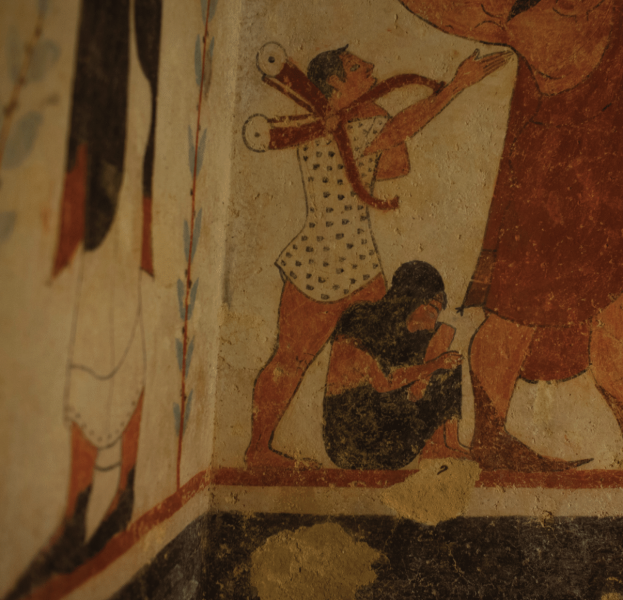
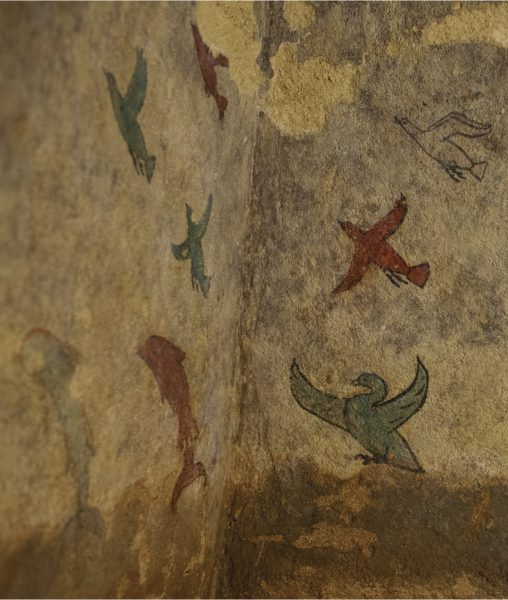
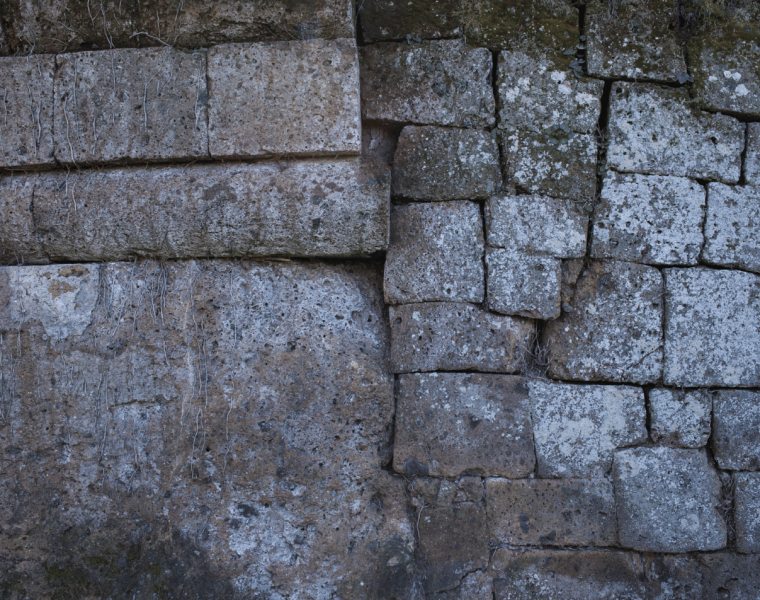
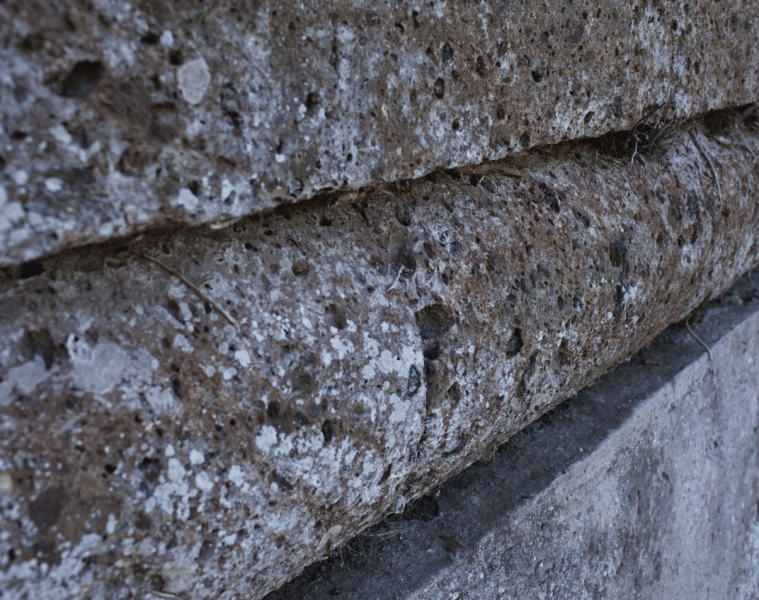
A research project by architect Morgan Lewis as 2017 Rome Scholar in Architecture at the British School in Rome exploring the origin of the cornice detail in the Etruscan tomb mounds (8th-6th C BCE) of Central Italy.
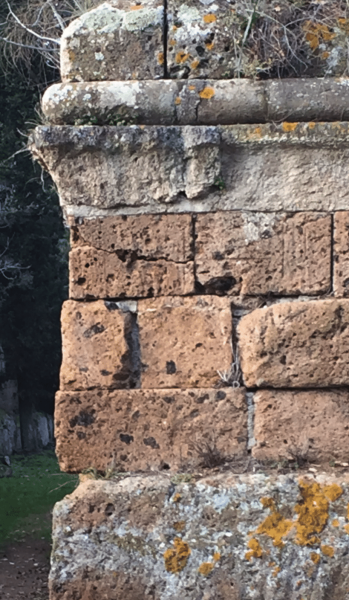
A cornice is a simple carved step detail. It is found typically on the exterior of buildings at floor levels or roof eaves, on the interior at the wall-ceiling juncture, in picture frames, around thresholds, and at the crown of furniture and objects. It is perhaps the most typical, universal and promiscuous example of ornament in the Western tradition of construction.
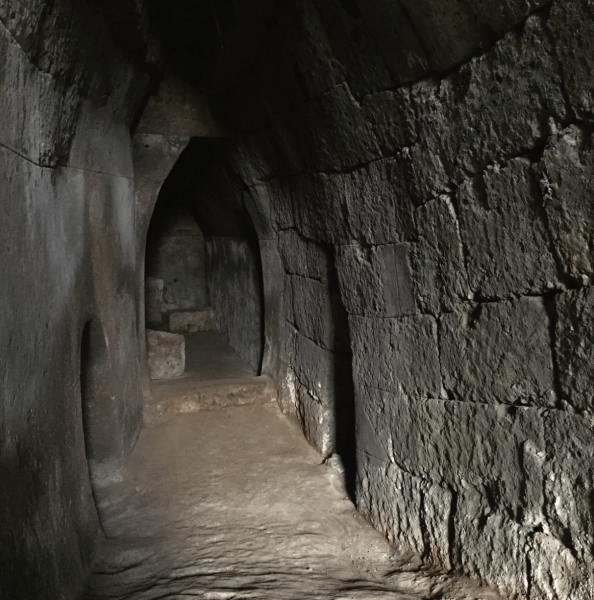
The earliest prototypical examples, as far as we are aware, are found on Etruscan monumental tombs of the 8th C. BCE.
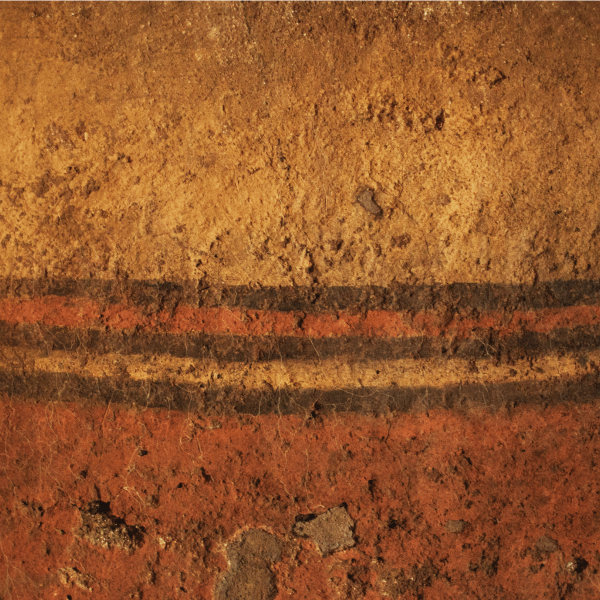
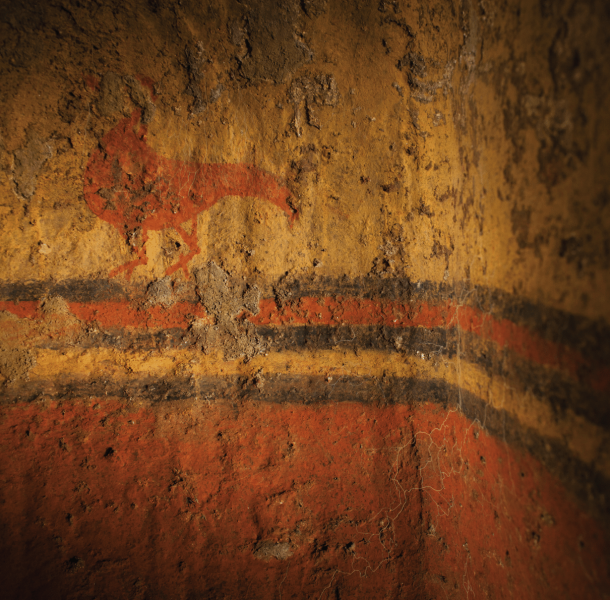
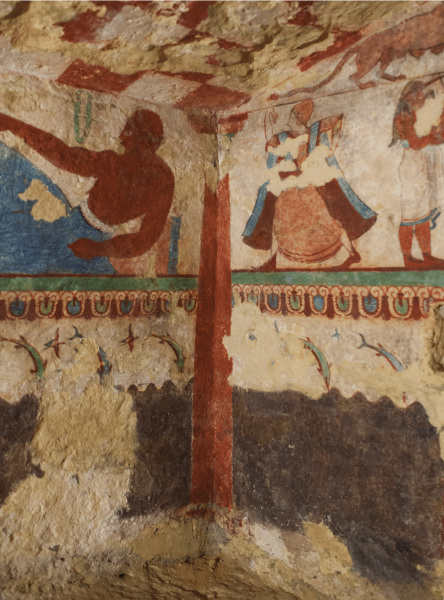
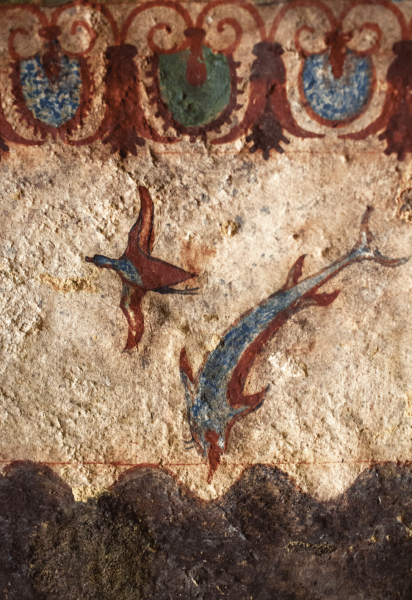
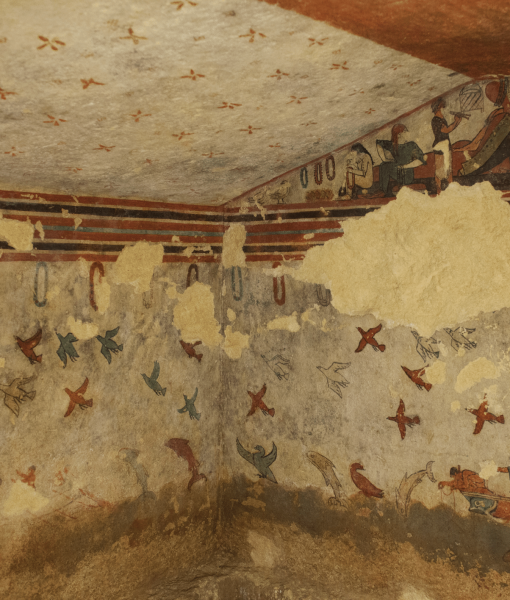
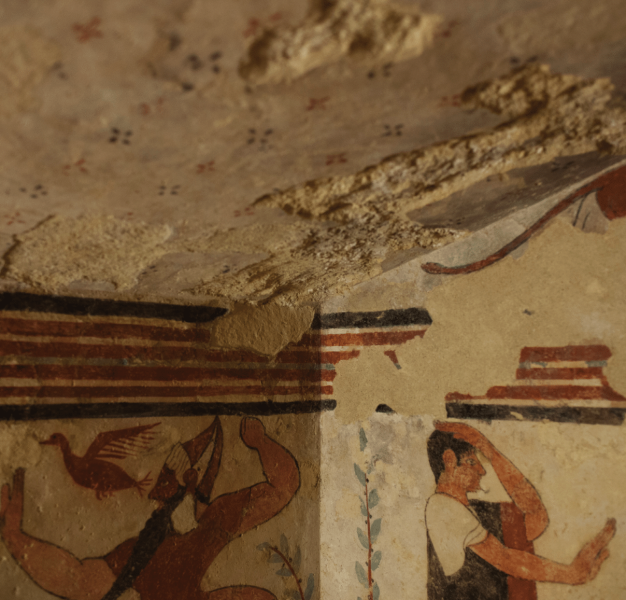
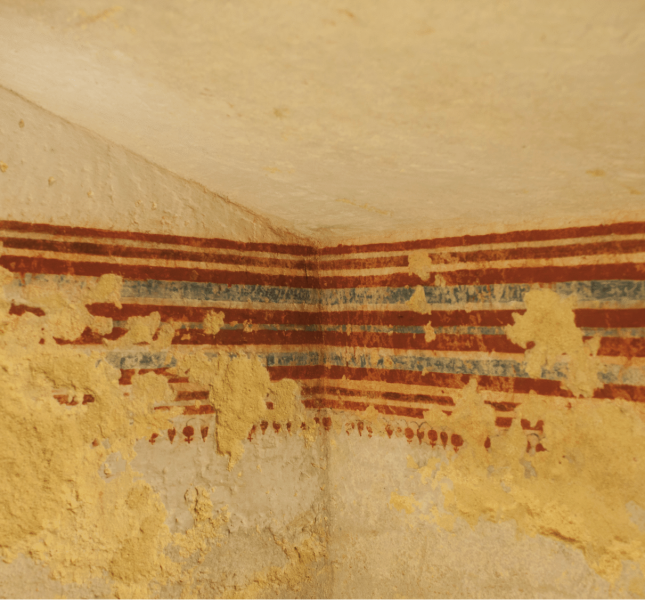
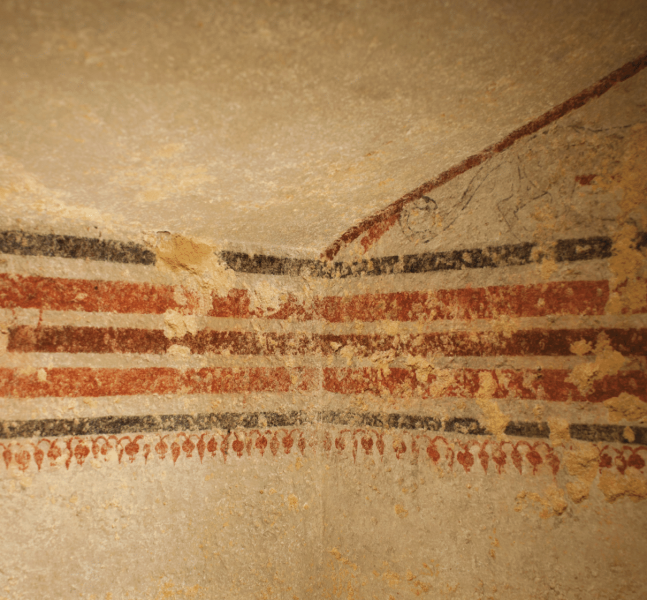
On the interior of the tombs a continuous painted horizontal line always represents a continuous panoramic visual horizon. On the exterior, a carved band marked the level of the ground plane, as it had existed prior to the excavation of the tomb. This universal detail shares a common root.
During the 7-5th C. BCE these primary architectural marks were formalised into the shape of cornices that we recognise today. It is an example of the formation of the architectural language of classicism, contemporaneous with the crystallisation of a standardised phonetic alphabet.
Photo credits: Morgan Lewis and Katherine Waters, 2017